




29 Jan Red Light Therapy: The Quiet Revolution in Skin Quality
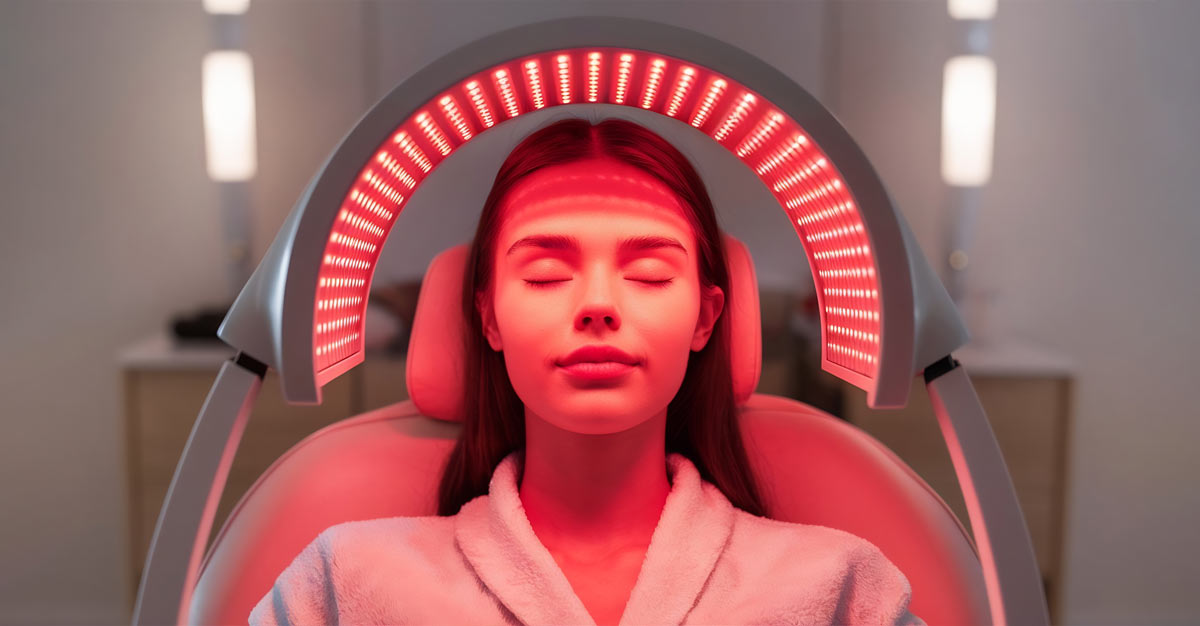
Not all aesthetic innovations announce themselves with spectacular before-and-after photos. Some work more quietly, more deeply, and more intelligently. Red light therapy belongs to this second category.
Once confined to medical rehabilitation and dermatology clinics, photobiomodulation—commonly known as LED or red light therapy—has become one of the most discussed tools in modern aesthetic medicine. Not because it changes faces, but because it changes how skin functions.
In an industry long dominated by volume, lifting, and resurfacing, red light therapy represents a different philosophy: improving skin quality at a biological level.
From Medicine to Aesthetics: A Technology with Serious Roots
Long before LED masks entered the beauty market, red and near-infrared light were used in hospitals to:
• Accelerate wound healing
• Improve tissue repair
• Reduce inflammation
• Support post-surgical recovery
NASA itself studied photobiomodulation for tissue regeneration in space. Dermatology later adopted this technology not as a cosmetic trend, but as a non-invasive way to stimulate cellular metabolism without damaging the skin.
This is what makes red light fundamentally different from lasers and energy-based devices: it does not work by creating injury. It works by optimizing cell performance.
What Really Happens Beneath the Skin
When red and near-infrared light penetrate the skin, they are absorbed by mitochondria—the “power plants” of our cells. This triggers a cascade of biological effects:
• Increased ATP (cellular energy) production
• Improved oxygen utilization
• Reduced oxidative stress
• Decreased chronic inflammation
• Activation of fibroblasts, the cells responsible for collagen and elastin
The result is not an artificial transformation, but a progressive improvement in skin density, resilience, and quality.
This is why red light therapy is often described by physicians as a “skin longevity” treatment rather than a classic anti-aging procedure.
A New Approach to Anti-Aging: Quality Before Correction
Modern aesthetic medicine is increasingly built on two complementary pillars:
• Structural correction: fillers, surgery, lifting devices
• Biological optimization: skin health, collagen integrity, tissue quality
Red light therapy belongs entirely to the second category.
It does not replace injectables or surgery. Instead, it:
• Improves the foundation on which these procedures work
• Enhances healing and recovery
• Makes results more stable and longer-lasting
• Helps the skin age more slowly and more gracefully
In other words, it does not sculpt the face—it improves the material the face is made of.
Not All Light Is Equal
While red and near-infrared light are the stars of regenerative LED therapy, modern medical platforms also use:
• Blue light for acne-prone skins (targeting acne-causing bacteria)
• Yellow light for post-procedure recovery, redness, and lymphatic drainage
However, when it comes to true skin regeneration and collagen stimulation, red and near-infrared wavelengths remain the gold standard.
The Home Device Boom: What Should Consumers Really Look For?
The explosion of LED masks and home devices has made light therapy more accessible—but also more confusing. Not all devices deliver real medical results.
Here is what truly matters:
1. The Right Wavelengths
Look for devices that use:
• Red light around 630–660 nm
• Near-infrared light around 830–880 nm
These are the wavelengths most studied for collagen stimulation and tissue repair.
2. Sufficient Power (Irradiance)
Many consumer devices are simply too weak. A good device should clearly state:
• Its power density (mW/cm²)
• And not just the number of LEDs or the colors
More diodes do not mean better results—proper energy delivery does.
3. Medical-Grade Design and Certification
Look for:
• CE or FDA clearance
• Transparent technical specifications
• Brands that work with physicians, not only influencers
4. Consistency Over Intensity
Red light therapy works through:
• Repetition
• Protocols
• Long-term use
It is a skin training program, not a one-time miracle treatment.
Who Benefits the Most?
Red light therapy is particularly valuable for:
• Early and moderate skin aging
• Thin, fragile, or stressed skin
• Post-laser, post-injection, and post-surgery recovery
• Redness-prone or inflammatory skin conditions
• Patients focused on prevention and skin longevity rather than drastic change
It is also increasingly used as:
• Pre-procedure skin preparation
• Post-procedure healing accelerator
• Long-term maintenance strategy
The Philosophy Behind the Light
In an age of overcorrection and visible aesthetic interventions, red light therapy represents something different:
a quieter, smarter, more biological approach to beauty.
It does not promise to change your face.
It promises to help your skin function better, longer, and stronger.
Red light therapy is not a trend. It is not marketing magic. And it is not a shortcut.
It is a scientifically grounded technology that fits perfectly into the new era of aesthetic medicine:
an era focused not on looking different—but on aging better.