




12 Jun Looking for Effective Hair Loss Treatment? Discover Clemenceau Medical Center’s Advanced PRP
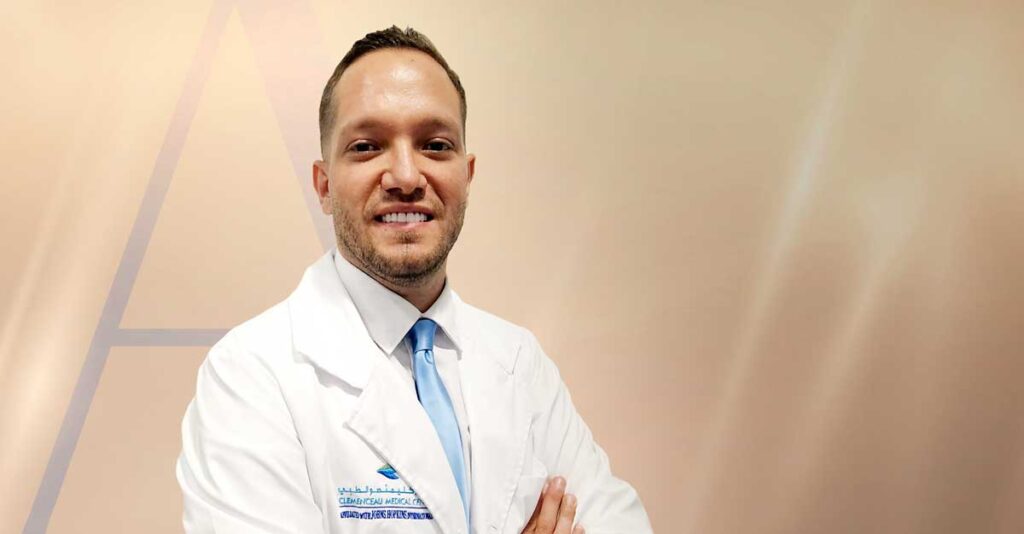
Dr. Ahmad Berjawi, Dermatologist and Aesthetic Specialist
Today, we’re exploring the advanced Platelet-Rich Plasma PRP techniques at Clemenceau Medical Center – Beirut, delving into the cutting-edge devices and technologies they employ to prepare this potent regenerative treatment. What sets their approach apart, ensuring optimal quality and concentration of platelets for superior results? Dr. Ahmad Berjawi, Dermatologist and Aesthetic Specialist at Clemenceau Medical Center – Beirut, shed light on the devices and techniques used at CMC to prepare advanced PRP for hair loss treatment.
We would like to shed light on the devices and technologies you use to prepare advanced PRP. What is the advanced Platelet-Rich Plasma (PRP) technique that you offer at Clemenceau Medical Center? What distinguishes it from other PRP techniques?
At Clemenceau Medical Center- Beirut, our approach to Platelet-Rich Plasma (PRP) therapy represents a significant advancement in regenerative medical techniques, setting us apart through our focus on the quality and efficacy of every component and process involved. A cornerstone of our distinguished PRP technique lies in the utilization of a superior, high-quality kit, with particular emphasis on the specialized collection tube. This is not just any standard tube; rather, it is engineered with a precise formulation of optimal ingredients.
These carefully selected components within the tube play a crucial role in preserving the integrity of the blood sample and, more importantly, in facilitating the maximum possible extraction and concentration of platelets and their vital growth factors. We understand that the therapeutic potential of PRP is directly correlated with the density of these bioactive elements, and therefore, our choice of collection tube is paramount in ensuring that the injected material is as potent and effective as possible.
Beyond the exceptional quality of our collection kit, another critical element that distinguishes our advanced PRP technique at Clemenceau Medical Center is the integration of a cutting-edge, highly advanced machine for the processing of the patient’s blood. This sophisticated equipment is not a standard centrifuge; it represents a significant investment in technology designed to optimize the separation and concentration of platelets with unparalleled precision and efficiency.
What are the features that ensure the quality and concentration of platelets?
The Platelet-Rich Plasma (PRP) technique represents a significant advancement in in-clinic treatments for hair concerns, offering a minimally invasive approach that underscores the body’s natural healing capabilities. This relatively quick, approximately 15-minute procedure harnesses the concentrated power of the patient’s own blood. By efficiently separating the plasma, which is naturally rich in crucial platelets and their associated growth factors, we obtain a potent biological solution. The importance of this lies in the direct delivery of these regenerative elements precisely where they are needed – the scalp and hair follicles in areas of thinning or loss.
This targeted injection of enriched plasma is a key advancement, allowing for a concentrated boost of growth factors directly at the cellular level, promoting natural hair revitalization with minimal intervention and patient discomfort. The simplicity and speed of the procedure further highlight its importance as a readily accessible and efficient option in the evolving landscape of hair restoration therapies.
What are the dermatological and cosmetic applications of the PRP technique? And what about the results that can be expected in cases such as skin rejuvenation, hair loss treatment, etc.?
PRP for hair is done monthly, once per month. We start with three consecutive monthly sessions, and then we do a maintenance session every three months. Patients can anticipate observing the initial signs of improvement and hair regeneration within a few weeks following the very first treatment session. The point of maximum efficacy and noticeable results is generally expected after the completion of the second PRP session. The primary applications and most significant medical indications for PRP hair treatment are in addressing androgenetic alopecia, a common form of hereditary hair loss, and also in cases where individuals have experienced chronic, ongoing hair thinning or a more recent, limited amount of hair loss attributed to periods of significant stress.
What are the criteria you rely on to determine the ideal candidate for undergoing the PRP technique?
To find the right candidates for PRP, I first examine the scalp to understand the nature of their hair loss. If I observe diffuse hair thinning, this is often a strong indication for PRP treatment. However, it’s essential to first rule out any underlying medical conditions by conducting blood tests to check for deficiencies like iron and Vitamin D, anemia, and thyroid disease. Any identified issues should be addressed before proceeding with PRP.
What about the procedures followed to ensure general safety during the procedure? What are the potential risks or side effects?
Regarding safety during the PRP procedure, we prioritize using sterile needles, syringes, and tubes. We also instruct patients to avoid showering for the 24 hours following the treatment. Side effects are typically very minor, potentially including some redness or slight inflammation at the injection sites. Overall, it’s considered a safe procedure.
How do you see the future of the PRP technique in the medical field? Are there any new or promising developments in this area?
The future of PRP appears very promising. Beyond hair restoration, we’re currently utilizing it for facial rejuvenation, observing improvements in skin texture, pores, and pigmentation. Excitingly, ongoing research is exploring PRP’s effectiveness around the eyes for treating dark circles, with encouraging initial results. Considering the persistent nature of dark circles and how many people are affected by them, this represents a particularly promising area for PRP’s application.