




16 Oct Dr. Rawad Baroud
The Intelligent BBL: How AI & Ultrasound Are Redefining Precision and Safety
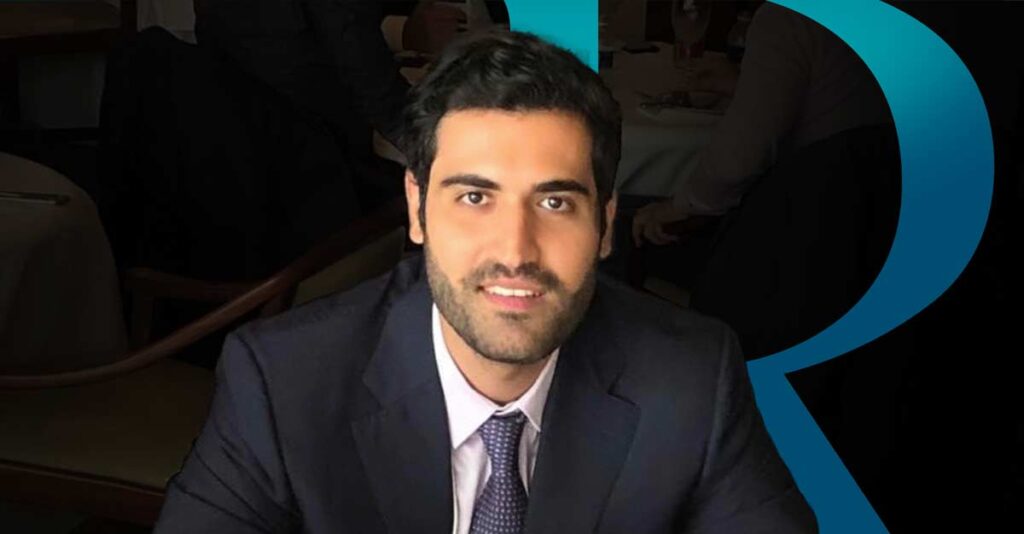
Once considered a purely artistic procedure, the Brazilian Butt Lift (BBL) is now entering a new, data-driven age. In Beirut, plastic surgeon Dr. Rawad Baroud stands at the forefront of this transformation, integrating AI and mobile ultrasound guidance into his practice to enhance precision, safety, and predictability. Trained in Brazil under the mentorship of Professor Farid Hakme, a key figure in modern aesthetic surgery, Dr. Baroud brings a global perspective to how technology is reshaping body contouring. In this interview, he discusses the evolution of BBL, the role of intelligent imaging, and how these advances are redefining both surgical technique and patient experience.
To begin, can you tell us about your journey into plastic surgery and how your international training shaped the surgeon you are today?
My name is Dr. Rawad Baroud, and I’m a plastic surgeon based in Beirut, Lebanon, where I’ve been practicing since 2021. I work across several leading hospitals, including Fouad Khoury Hospital (BMG), Hôpital Français du Levant, and Keserwan Medical Center.
I completed my plastic surgery training at the renowned Hospital da Plástica under Professor Farid Hakme in Rio de Janeiro, Brazil, in a program accredited by the Brazilian Society of Plastic Surgery (SBCP). I am also a proud member of ISAPS, ASPS, and LSPRAS.
BBL has evolved tremendously in recent years. What triggered this global shift toward safer and more technology-driven approaches?
The evolution of BBL reflects how aesthetic surgery constantly learns and adapts to improve both results and safety. In the early days, Professor Ivo Pitanguy performed one of the first documented fat transfer cases in 1969. Later, in the 1970s, liposuction introduced by Dr. Yves Illouz made intramuscular fat injection common practice. However, this approach carried serious risks of fat embolism, sometimes fatal. With mortality rates as high as 1 in 3,000, global plastic surgery societies created a BBL Task Force to redefine safety standards. The consensus was clear;fat should only be injected into the subcutaneous layer, above the muscle.
Then came ultrasound-guided BBL, which allowed real-time visualization of the cannula and tissue layers. This innovation transformed the procedure from a blind process into a controlled, image-guided technique focused on safety and precision.
What inspired you to integrate AI and mobile ultrasound into your BBL practice?
After my training in Brazil, I noticed the growing demand for body contouring in Beirut. At the same time, patients were more aware of BBL risks and wanted reassurance. When AI-enhanced mobile ultrasound systems entered the market, I saw an opportunity to elevate both precision and patient confidence. This technology transformed the operation into a visual, guided, and measurable process, giving me full control and giving patients peace of mind.
How does mobile ultrasound guidance work during a BBL?
I use a compact ultrasound device connected to a tablet or smartphone. It shows the skin, fat, and muscle layers in real time while the cannula appears as a bright moving line. This visualization allows me to track the cannula’s exact position and ensure that fat is injected only within the deep subcutaneous layer, safely above the muscle.
How does AI enhance ultrasound imaging compared to traditional systems?
AI provides automatic recognition of anatomical layers by color-coding the skin, fat, and muscle. It tracks the cannula’s movement and even issues alerts if it goes too deep or near a blood vessel. This clarity makes interpretation easier and lets the surgeon focus entirely on precision and safety.
Why is the deep subcutaneous layer considered the safest and most effective for fat grafting?
This layer, located just above the muscle, is better vascularized and less fibrous, allowing smoother fat distribution and higher survival rates. AI-assisted ultrasound lets us visualize this layer in real time, confirming the cannula remains exactly where it should be, ensuring maximum safety, precision, and consistency.
From a technical perspective, how do AI algorithms guide injection and fat distribution?
AI systems analyze tissue thickness and provide a “map” indicating where fat should be placed for ideal shape and symmetry. This helps achieve smoother contours while avoiding over-injection.
The main concern in BBL has been fat embolism. How does AI-assisted ultrasound reduce this risk?
Fat embolism occurs when fat enters a vein. With AI-guided ultrasound, I can continuously see the cannula tip and get alerts if it nears the muscle or vascular structures. This constant feedback significantly reduces the risk.
Have you noticed improved results since adopting this technology?
Absolutely. I’ve seen higher fat graft survival and greater patient satisfaction. Precise placement under visualization ensures the fat integrates more evenly, minimizing lumps and irregularities.
Patients enjoy more natural, stable, and long-lasting results, along with greater confidence in the procedure’s safety.
How does this technique help patients with limited donor fat?
In slimmer patients, every milliliter counts. Injecting into the correct deep subcutaneous layer allows fat to spread smoothly and survive better, meaning less volume achieves a better contour.
AI guidance ensures that even with limited donor fat, results remain balanced and natural.
Beyond safety, how has technology improved the patient experience?
Technology has changed the entire journey:
- Consultation: Patients can see their anatomy on screen and understand how safety is maintained.
- Procedure: AI and ultrasound make the surgery more predictable and controlled.
- Recovery: Fat placement is smoother, leading to less bruising and swelling and a faster, more natural-looking recovery.
Can this technology be applied to other fat grafting or body-contouring procedures?
Yes, and we’re already using it. In facial fat transfer, it helps avoid major vessels while targeting precise layers. In breast surgery, it’s useful for assessing tissue and implant position or refining results in hybrid augmentations. In every application, it turns the procedure into a guided, controlled, and safer experience.
How do you see AI shaping the future of aesthetic surgery?
AI will soon be part of every stage, from 3D surgical planning and proportion analysis to real-time guidance and post-operative monitoring. It will become an intelligent assistant that enhances the surgeon’s vision without replacing it, making aesthetic surgery more predictable, data-driven, and tailored to each patient.
What kind of training do surgeons need to use AI-guided ultrasound effectively?
The learning curve is smooth. Most surgeons already understand anatomy and ultrasound basics.
AI simplifies the process by highlighting layers, tracking the cannula, and issuing alerts. With focused workshops and practice, surgeons quickly become proficient, combining their experience with intelligent tools for greater safety.
How can collaboration between surgeons and tech developers drive innovation?
Surgeons understand real operating-room challenges, while developers have the means to solve them.
Together, they can create smart, user-friendly systems that truly enhance precision and outcomes. The future lies in AI platforms that learn from surgical data and continuously refine themselves, bringing safer, smarter, and more personalized results.
If you could summarize it in one sentence, how is AI transforming BBL?
AI is transforming BBL from a blind artistic procedure into a guided, data-driven science where every decision is visible, measurable, and patient-centered.