




07 Jul Dr. BasSel Francis
Through the Eyes: The Art and Precision of Oculoplastic Surgery with Dr. Bassel Francis, ophthalmologist and oculoplastic surgeon

In an era where our eyes speak louder than words, whether through a screen or behind a mask, oculoplastic surgery has emerged as a powerful blend of function, form, and subtle artistry. In this exclusive interview, PA Magazine sits down with Dr. Bassel Francis, a distinguished ophthalmologist and oculoplastic surgeon, to explore the delicate world of eyelid surgery. With advanced training in France and years of specialized experience, Dr. Francis shares his personal approach to blepharoplasty, debunks common myths, and explains why natural results, anatomical respect, and patient-centered care are at the core of every procedure he performs.
Dr. Francis, could you start by telling us about your background and how you specialized in ophthalmology and oculoplastic surgery?
I completed my medical internship at the prestigious hospitals of Paris. In France, oculoplastic surgery is not a fellowship like in the U.S. It’s a full specialty based on experience and academic qualifications. I had the privilege to train under Professor Serge Morax at the Rothschild Foundation in Paris, which is the national reference center for oculoplastic and reconstructive surgery. I also completed additional university degrees in neuro-ophthalmology.
Upper & lower blepharoplasty are making a major comeback, what’s driving this renewed interest?
The eyes are the most expressive part of the face. During the COVID-19 pandemic, people wore masks and only the eyes remained visible. That shifted public focus, even more toward the periorbital area. Your eyes communicate your age, fatigue, health, and emotions. In the age of social media and constant visibility, this has become more important than ever. I’ve treated many patients in media, TV, and public-facing roles where maintaining a fresh and youthful appearance is crucial. But beyond the aesthetic, oculoplasty is about restoring confidence and function in a subtle and natural way.
Some people associate blepharoplasty with aging. Can you clarify who is actually a candidate?
This is one of the most common misconceptions. Blepharoplasty is not based on age; it’s based on indication. I’ve operated on patients as young as 18 who had severe under-eye puffiness that affected their self-esteem. If there’s a valid anatomical reason; excess skin, fat herniation, muscle laxity, it can be addressed, regardless of age. Sometimes, makeup artists or media professionals request targeted procedures to enhance the eye contour, especially for eyeliner definition.
But I will never operate unless there’s a solid medical or anatomical reason. I work toward natural results that respect the patient’s ethnic background and facial balance.
Can you walk us through the different approaches to upper and lower blepharoplasty?
For upper blepharoplasty, I focus on removing the excess skin while maintaining a natural fold. The goal is never to create an artificial or ‘operated’ look. I evaluate each case individually, sometimes an external lateral lift is sufficient, other times a brow lift is also needed. But in most cases, with proper technique, I can avoid brow lifts altogether. For lower blepharoplasty, my technique is very specific: I always go transconjunctival, through the inside of the eyelid. I never make external incisions for the lower lid.
This way, I access the fat pads without disturbing the muscle or skin, avoiding complications like round eye or visible scarring. If necessary, I’ll follow with a lateral canthopexy or contour lift to maintain support. It’s a refined, vector-based approach, always lifting laterally and upward for the best aesthetic and structural outcomes.
You mentioned dark circles and puffiness. Are those treatable with surgery?
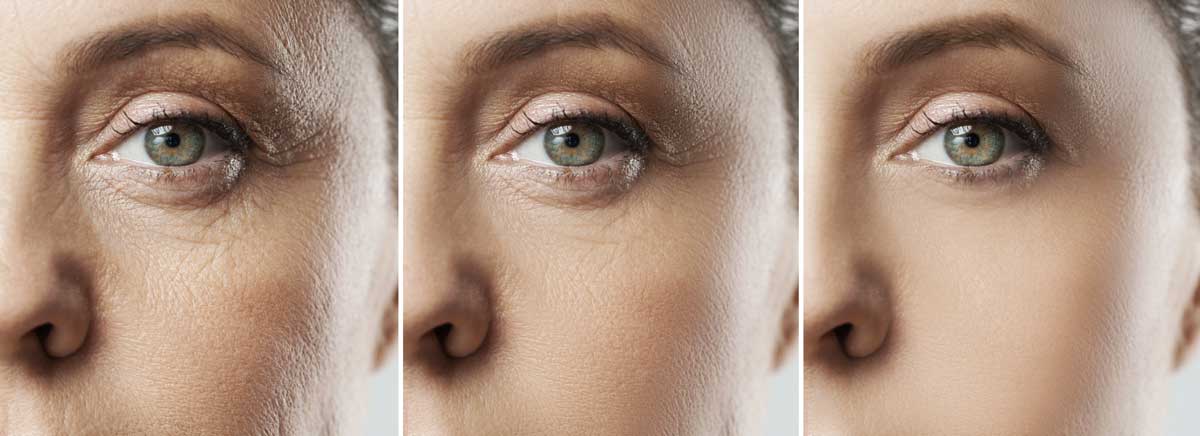
It depends on the cause. Puffiness is often due to fat prolapse, muscle laxity, or excess skin all of which can be addressed surgically. But dark circles are usually either due to hyperpigmentation or vascular visibility under thin skin. Surgery won’t fix that. In such cases, I use fillers under the eye to create a buffer between the skin and the blood vessels, which improves the appearance.
What about ptosis or droopy eyelids? Is that the same as excess skin?
That’s an important distinction. Ptosis is caused by weakness in the eyelid’s lifting muscles, primarily the levator and Müller’s muscle not by skin. A blepharoplasty won’t correct ptosis. It’s a different procedure altogether and requires deep anatomical knowledge. Not every surgeon is trained to treat ptosis properly. It’s delicate and, if done incorrectly, can affect vision.
What should patients expect in terms of recovery?
Upper blepharoplasty usually takes 5 to 7 days for initial recovery. I use very fine sutures, nylon 6-0 and the scar is hidden in the natural crease. Lower blepharoplasty, especially with my transconjunctival method, has minimal downtime. Bruising or swelling can last from a few days to a few weeks, depending on the case. When I do more complex procedures like canthopexy or neotendon suspension, recovery might take longer due to deeper tissue involvement. But the majority of patients are back to their routines within 10 days.
Are there any risks or contraindications?
Every surgical procedure carries some level of risk. For upper blepharoplasty, complications are very rare. For the lower lid, there’s a documented but extremely rare risk; 1 in 20,000 of vision loss due to orbital hemorrhage. That’s why I operate in fully equipped settings, never in a clinic. I insist on full preoperative evaluations, especially for patients on anticoagulants or with chronic conditions like diabetes or hypertension.
What advice would you give someone considering eyelid surgery?
Know your “why.” Are you doing this for yourself or for others? Are you expecting to look less tired or to erase time entirely? Blepharoplasty is not a full facelift; it’s a precision procedure for subtle rejuvenation. Set realistic expectations and trust the process. When done correctly, the result is natural, fresh, and long-lasting.