




03 Sep Biological Age vs. Chronological Age
Why the Number on Your Birthday Cake Doesn’t Tell the Whole Story
Every year, we celebrate another birthday. The candles increase, the calendar advances, and our chronological age rises by one. It is a number we cannot change. But modern science suggests that another number may be even more important, one that isn’t printed on any official document.
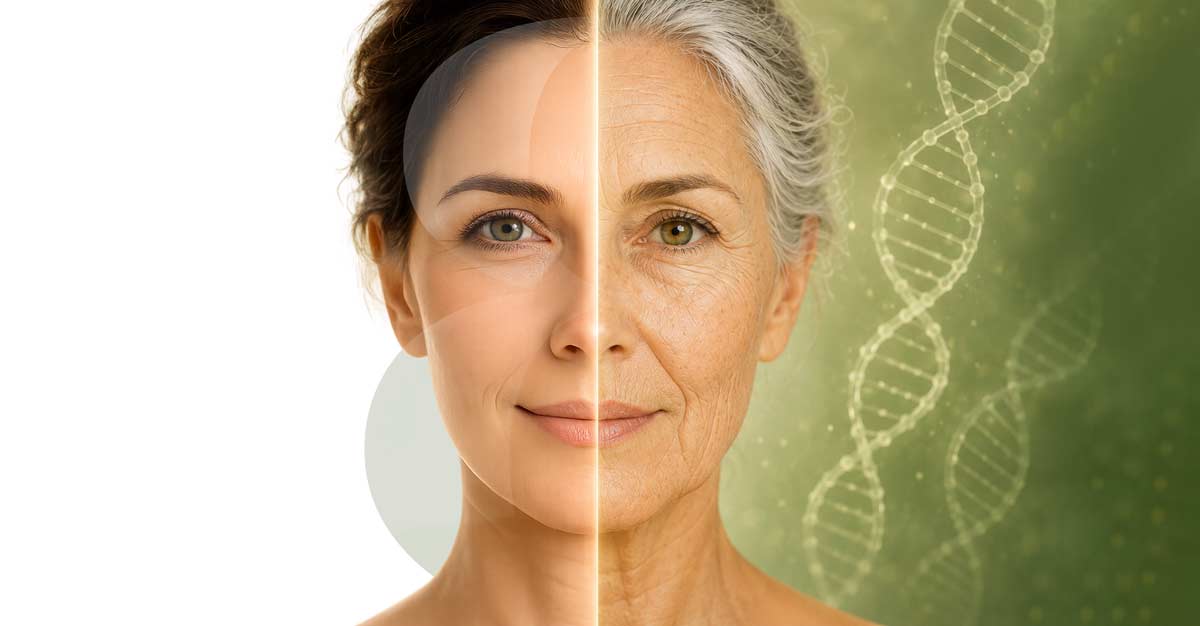
It is known as biological age, and it reflects how well our body is actually aging. Two people may both be 50 years old, yet one may have the cardiovascular health, muscle strength, skin quality, and metabolic function of someone decades younger, while the other experiences diseases and physical decline more commonly associated with advanced age. The difference lies not simply in genetics, but in the complex interaction between lifestyle, environment, and biology.
Two Ages, One Body
Chronological age measures the number of years since birth. Biological age, on the other hand, attempts to estimate the condition of the body’s organs, tissues, and cells. It reflects how efficiently they function rather than how long they have existed. While chronological age moves forward at exactly the same pace for everyone, biological aging varies considerably from person to person. This explains why some individuals remain physically active, mentally sharp, and energetic well into their seventies, while others develop chronic illnesses decades earlier.
What Makes Us Age Faster?
Aging is a natural process, but the speed at which it occurs can be influenced by many factors. Persistent smoking, excessive sun exposure, poor nutrition, physical inactivity, chronic stress, inadequate sleep, obesity, and uncontrolled medical conditions such as diabetes or hypertension have all been associated with accelerated biological aging. These factors contribute to chronic inflammation, oxidative stress, hormonal changes, and cellular damage that gradually reduce the body’s ability to repair itself. The visible consequences often appear first in the skin, but the same biological processes are occurring throughout the cardiovascular system, muscles, bones, brain, and internal organs.
Can Biological Age Be Measured?
Researchers have developed several methods to estimate biological age, although none provides a complete picture on its own. Some assessments rely on physical markers such as blood pressure, body composition, muscle strength, and cardiovascular fitness. Others analyze laboratory values including cholesterol, blood sugar, inflammatory markers, or liver and kidney function.
More advanced techniques examine molecular changes, including DNA methylation patterns, often referred to as “epigenetic clocks”, which have become valuable research tools for understanding the aging process.
Wearable technology is also contributing to this field by monitoring sleep quality, heart rate variability, activity levels, and recovery patterns. While these devices cannot determine biological age directly, they provide meaningful insights into behaviors that influence healthy aging.
Although no single test can precisely define a person’s biological age, combining clinical evaluation with lifestyle assessment offers a far more comprehensive understanding of overall health than chronological age alone.
The Skin as a Mirror of Aging
One of the first places where biological aging becomes visible is the skin. Collagen production slows, elastin fibers weaken, cellular renewal becomes less efficient, and cumulative exposure to ultraviolet radiation gradually affects skin quality.
However, these changes do not occur at the same rate in everyone. People who consistently protect their skin from sun damage, avoid smoking, eat a nutrient-rich diet, sleep well, and maintain regular physical activity often preserve healthier skin for longer. This explains why aesthetic medicine is increasingly shifting toward prevention and skin quality rather than simply correcting wrinkles once they appear.
Healthy skin is often the visible expression of healthy aging taking place beneath the surface.
Can We Slow Biological Aging?
While aging cannot be stopped, growing evidence suggests that its progression can be influenced.
Regular exercise, particularly resistance training, helps preserve muscle mass, improve insulin sensitivity, and support metabolic health. Balanced nutrition rich in vegetables, fruits, healthy fats, whole grains, and adequate protein provides essential nutrients for cellular repair.
Quality sleep allows the body to restore tissues, regulate hormones, and strengthen immune function. Managing stress reduces the long-term effects of elevated cortisol, while avoiding smoking and limiting excessive alcohol intake further protect cellular health. Routine medical screenings also play a critical role by identifying risk factors before they develop into chronic disease. Increasingly, physicians view healthy aging as the cumulative result of many small, consistent habits rather than a single intervention.

Where Does Aesthetic Medicine Fit?
As longevity science evolves, aesthetic medicine is adapting alongside it. Modern treatments are no longer focused solely on making patients appear younger. Instead, they aim to preserve tissue quality, stimulate natural collagen production, improve skin health, and complement healthy lifestyle practices. Biostimulators, regenerative procedures, energy-based devices, and personalized skincare all reflect this broader philosophy. The goal is not to erase every sign of aging but to support healthier aging while maintaining natural appearance and facial harmony.
A New Perspective on Age
Chronological age will always continue to rise. That is inevitable. Biological age, however, reminds us that aging is not simply measured by the passage of time but by how well the body functions through each stage of life.
It is shaped by daily choices, preventive healthcare, scientific advances, and the commitment to preserving health rather than waiting to restore it. Perhaps the most important lesson of longevity medicine is that we should stop asking, “How old are you?” Instead, we might ask a far more meaningful question: How well are you aging?