




04 Sep The Scalp Is Skin Too
Why Hair Is Becoming the New Frontier of Aesthetic Medicine
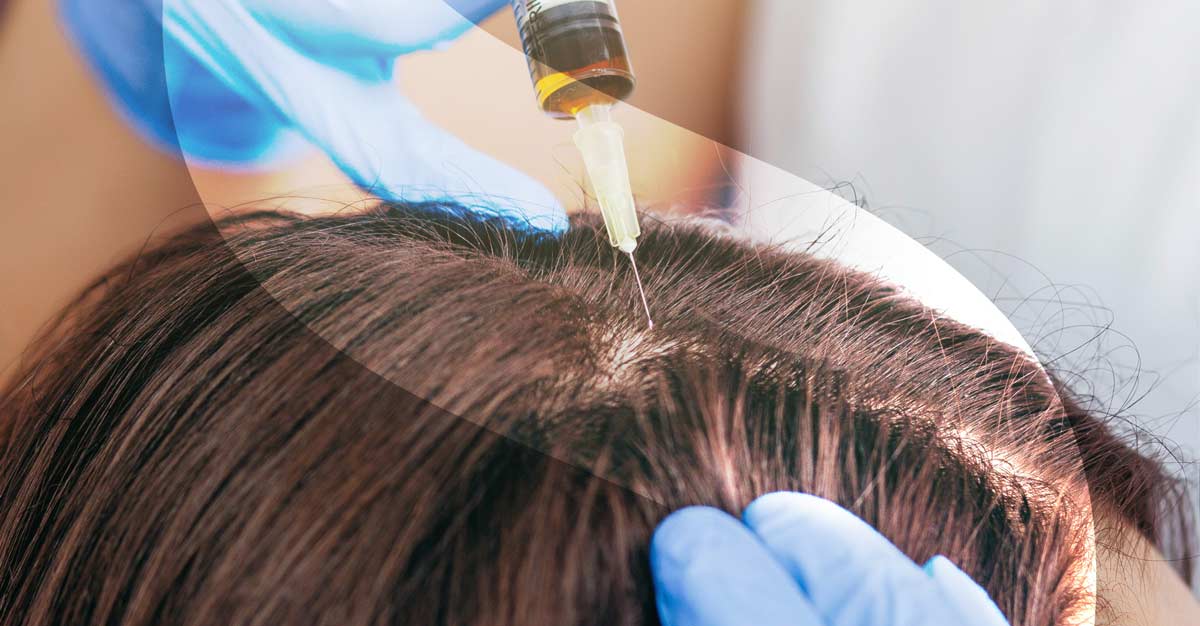
For years, aesthetic medicine has concentrated on what we see first in the mirror: wrinkles, pigmentation, skin texture, facial volume and the jawline. Yet sitting only a few centimeters above all of this is an area that has received surprisingly little attention. The scalp.
We moisturize facial skin, protect it from ultraviolet radiation, stimulate its collagen and carefully monitor the first signs of aging. The scalp, meanwhile, is usually noticed only when something goes wrong; when the ponytail becomes thinner, the part appears wider, the temples begin to recede or more hair than usual appears in the shower. That may be changing.
Hair restoration is increasingly moving beyond the traditional question of “How do we grow more hair?” toward a more sophisticated one: What is happening to the biological environment in which that hair is trying to grow? And that is bringing the scalp firmly into the world of aesthetic and regenerative medicine.
Hair Ages Before We Become Bald
Hair aging does not necessarily mean baldness. With time, individual hair fibers may become finer. Growth cycles can shorten. Pigment-producing cells gradually lose activity, producing grey hair. Some follicles undergo progressive miniaturization, producing increasingly thin hairs until they become barely visible. The result can be subtle. A woman may still have hair covering her entire scalp but feel that she has “half the hair she used to have.” Her central part may become more visible and her ponytail circumference smaller. A man may notice recession around the temples long before obvious baldness develops. This distinction matters because hair density is part of how we perceive age. We rarely consciously analyze someone’s hairline, but it helps frame the face. A dense, healthy hairline can create an impression of youth, while temporal recession or diffuse thinning can alter facial proportions even when the skin itself looks youthful. This is why some aesthetic specialists are beginning to regard hair as part of facial rejuvenation rather than an entirely separate specialty.
The Scalp Has Its Own Biology
Underneath every hair is a surprisingly complex miniature organ: the hair follicle. Follicles interact with blood vessels, nerves, immune cells, sebaceous glands and surrounding connective tissue. They repeatedly cycle through phases of active growth, transition, rest and shedding. That cycle is sensitive. Genetics, hormones, nutritional deficiencies, illness, medications, significant weight loss, psychological or physiological stress and inflammatory scalp disorders can all influence it.
Androgenetic alopecia; the most common form of progressive hair loss in both men and women; is strongly influenced by genetics and androgen signaling. But not every person with thinning hair has androgenetic alopecia.
Iron deficiency, thyroid disorders, autoimmune disease, postpartum hormonal changes, severe calorie restriction and certain medications can produce very different forms of hair loss.
This is precisely why jumping directly into an aesthetic treatment can be a mistake. Hair loss is a symptom before it is a cosmetic diagnosis.
A responsible assessment may include examination of the scalp, medical history, pattern of thinning, dermoscopic evaluation and, when appropriate, laboratory testing.
Because stimulating follicles makes little sense if the real problem has not been identified.
What About the “Aging Scalp”?
The concept is still evolving, but researchers increasingly recognize that the scalp itself undergoes biological changes. Like facial skin, it experiences oxidative stress, inflammation and environmental exposure. Ultraviolet radiation can affect exposed areas, particularly along the part and in people with significant thinning.
The follicular environment also changes with age. Research into hair biology has examined processes including cellular senescence, changes in stem-cell behavior, oxidative damage, micro-inflammation and alterations in the signaling mechanisms controlling the hair-growth cycle. This does not mean that every thinning scalp can simply be “rejuvenated.” But it does help explain why the future of hair medicine may involve protecting the follicular environment as well as stimulating hair growth.
PRP: Popular, But Not Magic
Platelet-rich plasma, or PRP, has become one of the best-known regenerative treatments for hair loss. Blood is collected from the patient, processed to concentrate platelets and then injected into the scalp. Platelets release signaling molecules and growth factors involved in tissue repair. Studies suggest that PRP can improve hair density or thickness in some patients with androgenetic alopecia, although protocols vary considerably between clinics. And that variation matters. The concentration of platelets, preparation technique, injection depth, treatment intervals and patient selection are not standardized universally. PRP therefore occupies an interesting position: it has meaningful clinical evidence, but it is not a guaranteed hair-regrowth treatment, nor should it replace established medical therapies when those are indicated. The patient with early follicular miniaturization is very different from someone whose follicles have been inactive for many years. Regenerative medicine cannot regenerate what is no longer biologically capable of producing hair.
The Rise of Exosomes; and the Questions Around Them
Few words have entered aesthetic medicine as rapidly as exosomes. These microscopic extracellular vesicles allow cells to communicate by transporting proteins, lipids and genetic material. Their potential role in tissue repair has generated enormous scientific interest. That interest has quickly reached hair restoration. Exosome-based scalp treatments are now marketed in some clinics as a next-generation alternative or complement to PRP. The biology is fascinating. The clinical reality is more cautious. Research is ongoing, and products marketed as “exosomes” can differ substantially in origin, manufacturing and composition. Regulatory status also varies by country and indication. For consumers, the important lesson is simple: “Regenerative” does not automatically mean proven. A sophisticated clinic should be able to explain exactly what is being administered, what evidence supports it and what remains experimental.
Microneedling: More Than Making Tiny Holes
Microneedling has also entered hair restoration. Controlled micro-injury to the scalp may stimulate wound-healing pathways and can potentially enhance penetration or complement certain established therapies. Some clinical studies have investigated microneedling alongside topical minoxidil, with encouraging results in selected patients.
But again, combination treatment makes interpretation complicated. Was improvement caused by microneedling? The medication? The interaction between the two? Hair medicine increasingly involves multimodal treatment, which can be more effective but makes dramatic marketing claims about one particular procedure difficult to justify.
Low-Level Light: Science or Gadget?
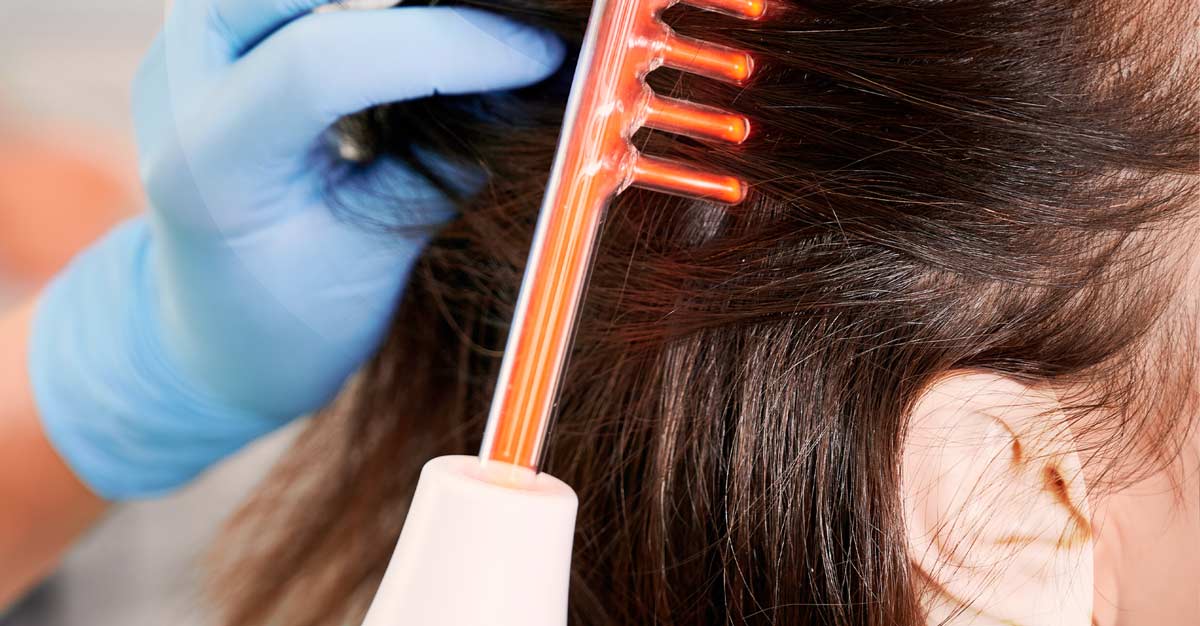
Red-light and low-level laser devices have moved from clinics into homes, appearing as helmets, caps and comb-like devices. Photobiomodulation uses specific wavelengths of light to influence cellular activity. Some evidence suggests appropriately designed devices can modestly improve hair density in androgenetic hair loss. But the consumer market is enormous, and devices are not interchangeable. A sleek helmet advertised online does not necessarily deliver the same wavelength, energy or treatment protocol used in clinical studies. Technology matters. So does diagnosis.
And Sometimes the Answer Is Still Medication
The explosion of regenerative aesthetics can make older treatments sound unfashionable. That would be a mistake. Minoxidil remains one of the best-established therapies for common pattern hair loss, and physicians may use other medications depending on diagnosis, sex, age and individual risk factors. New formulations and approaches; including oral medications in carefully selected patients; have also renewed interest in medical hair restoration. The future is unlikely to be medicine versus regenerative treatment. It may be medicine plus regenerative strategies, devices and, when appropriate, surgery.
Hair Transplantation Has Changed Too
Hair transplantation once carried an unmistakable aesthetic signature: obvious plugs and unnatural hairlines. Modern follicular-unit transplantation can be remarkably subtle. Individual follicular units can be redistributed from genetically resistant donor areas to thinning regions, with careful attention to hair direction, density and natural hairline irregularity. But transplantation does not create unlimited new hair. It redistributes a finite supply. That makes long-term planning crucial, especially in younger patients whose hair loss may continue after surgery. A technically perfect transplant performed without considering future progression can eventually look unnatural. Women’s Hair Loss Is Different.
One of the biggest changes in hair medicine is growing recognition of female hair loss
Women may develop diffuse thinning across the crown while retaining the frontal hairline. Hormonal transitions, iron deficiency and other medical factors may also contribute. And the psychological impact can be substantial.
Because complete baldness is less common in women, female hair loss was historically underestimated or dismissed as a minor cosmetic concern. Today, specialists increasingly recognize that a widening part can deserve the same diagnostic seriousness as a receding male hairline.
Hair May Be the Missing Piece of Facial Rejuvenation
Imagine rejuvenating a face by ten years while ignoring progressive temporal recession and thinning around the hairline. Something may still appear older; even if it is difficult to identify exactly what. This is where aesthetic medicine may be heading next. The future consultation could involve more than analyzing wrinkles and facial volume. It may consider the entire visual frame of the face: forehead proportions, temples, brows, hairline and hair density.
Not because everyone needs treatment. But because aging does not stop at the forehead. Perhaps the most interesting shift is philosophical. For decades, hair restoration was largely about replacing lost hair. The emerging approach is broader: diagnose earlier, preserve follicles longer, improve the scalp environment where evidence supports it, and intervene before advanced loss occurs. In other words, hair medicine is beginning to adopt the same philosophy that transformed modern aesthetic medicine itself. Prevention before correction. Preservation before replacement. And suddenly, the skin we almost never thought about may become one of the most interesting areas in aesthetics.